

Try this in the studio
Step by step
- 1
Write the hook
An action or line that stops the scroll: the product in hand, a reaction, a question. Describe it at the start of the prompt, because the first second of the clip is what the viewer judges.
- 2
Create your creator
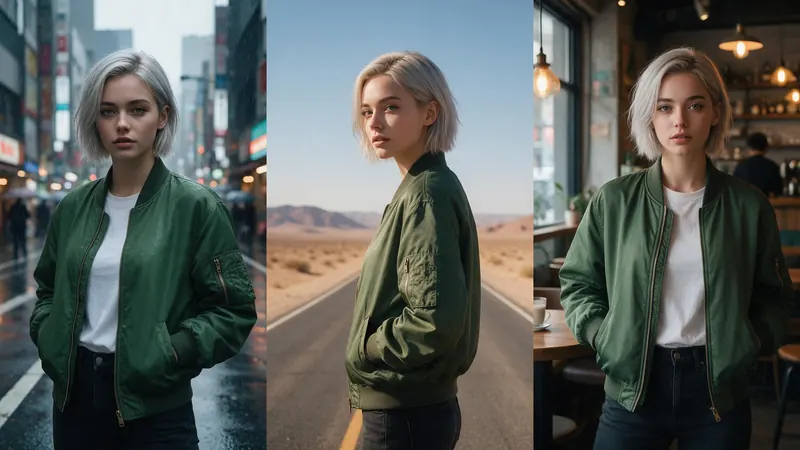
Save a character (4 credits) with the face you want in your ads and call it by its @handle in every prompt. The same face across hooks and follow-up ads makes the account feel like one real creator, not a different stranger each time.
- 3
Use the UGC Hook template
Handheld, vertical and the product always in frame, in a 8-second clip for 50 credits.
- 4
Plan the shots
Each clip runs 4 to 15 seconds, so a longer ad is several shots joined together: hook, problem, product, proof and call to action. Write one prompt per shot and keep the same @character, outfit and room in each.
- 5
Test several hooks
Generate several versions of the first shot with Seedance 2.0 Fast (12 credits for 5 seconds at 720p), pick the one that holds attention, and render the winner with Seedance 2.0.
- 6
Join, caption and export in vertical
Put the shots in order in the free video editor, add captions (most people watch with the sound off) and keep the aspect ratio at 9:16 for TikTok, Reels and Shorts.
Example prompts
Put your character and your product in place of the examples. One prompt is one shot.
Unboxing
@your-character opens a box and takes out the product, genuine surprise, natural room light, handheld, vertical.
Before and after
@your-character shows the problem, then the result with the product, medium shot, handheld, vertical.
Reaction
@your-character tries the product and reacts to camera, close-up, morning bathroom light, vertical.
Talking to camera
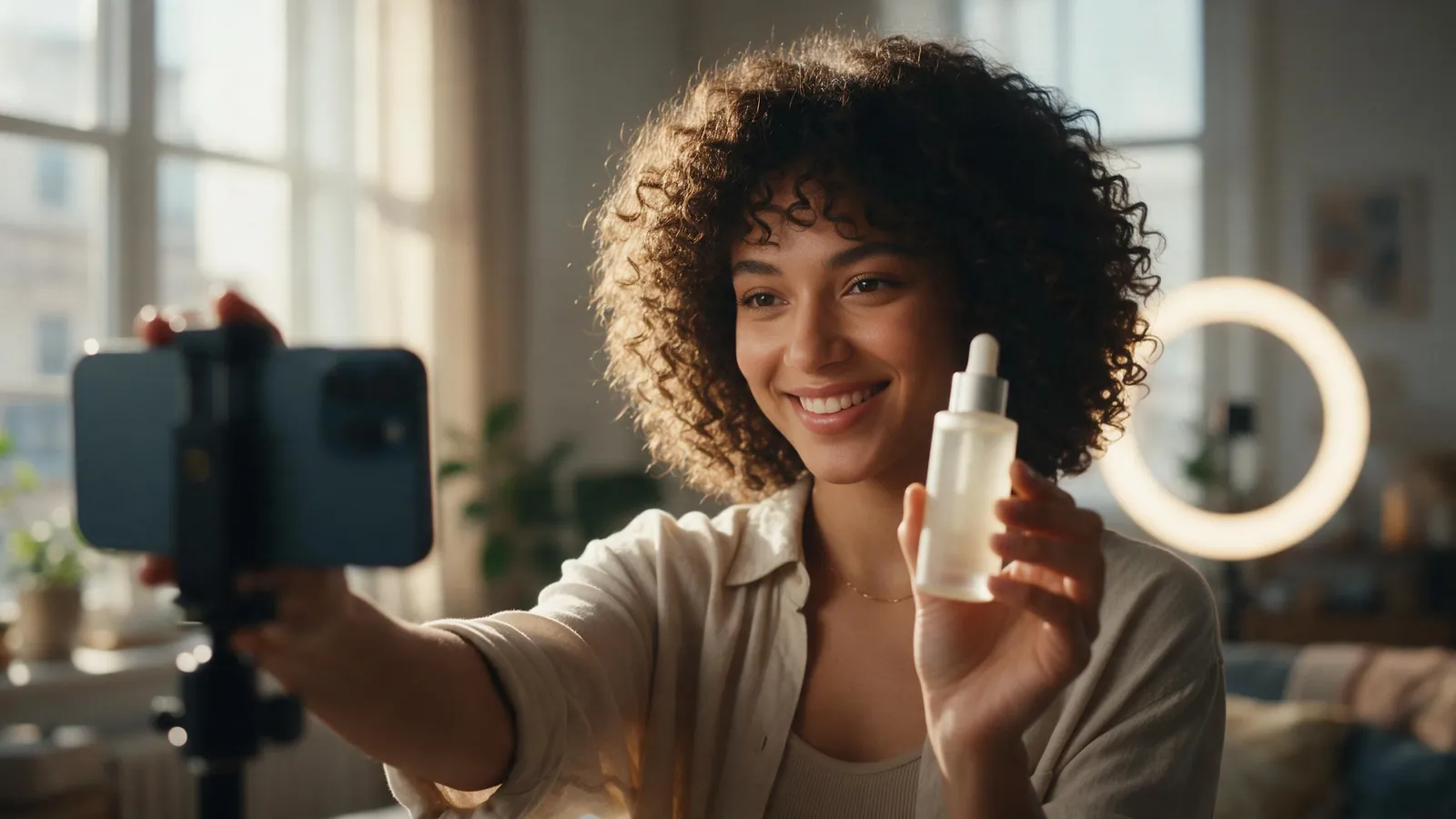
@your-character sits in a parked car, holds the product up to the phone camera and talks about it casually, daylight through the windscreen, selfie angle, slight handheld shake, vertical.
Routine
@your-character in a kitchen at night uses the product as part of a quick routine, warm lamp light, filmed from the counter, a few natural pauses, vertical.
Seedance price per second on KreatorFlow
Seedance 2.0 and 2.5 at 720p and above: price per second on each plan (monthly and annual), credits per 5-second clip, and clips per plan.
| Model · resolution | Credits | Per second | USD per second (monthly) | USD per second (annual) | Creator · 525 credits/mo | Pro · 1,050 credits/mo | Max · 2,500 credits/mo | Business (2 seats) · 4,500 credits/mo |
|---|---|---|---|---|---|---|---|---|
| Seedance 2.0 · 720p | 15/5s | 3/s | $0.119–0.145/s | $0.099–0.121/s | 35 | 70 | 166 | 300 |
| Seedance 2.0 · 1080p | 30/5s | 6/s | $0.238–0.289/s | $0.198–0.241/s | 17 | 35 | 83 | 150 |
| Seedance 2.0 · 4K | 70/5s | 14/s | $0.554–0.675/s | $0.462–0.563/s | Pro and up | 15 | 35 | 64 |
| Seedance 2.5 · 720p | 24/5s | 4.8/s | $0.190–0.231/s | $0.158–0.193/s | 21 | 43 | 104 | 187 |
| Seedance 2.5 · 1080p | 50/5s | 10/s | $0.396–0.482/s | $0.330–0.402/s | 10 | 21 | 50 | 90 |
| Seedance 2.5 · 4K | 120/5s | 24/s | $0.950–1.157/s | $0.792–0.964/s | Pro and up | 8 | 20 | 37 |
Seedance 2.0 and 2.5, 720p and above. Plan columns: 5-second clips a month on the plan's full monthly credits. Longer clips cost the same per second, so a 10-second clip uses twice the credits. Generated audio is included. USD per second: each plan's price over its full monthly credits, lowest to highest plan; monthly is the regular monthly price, annual is the yearly price divided by 12.
What makes a UGC ad work
The first second decides whether people keep watching. Show the product early and keep one message per ad: one problem, one product, one reason to believe.
Make it feel shot on a phone: handheld, real light and an everyday place like a bedroom, a car or a kitchen. Polished studio light reads as an ad and gets skipped; a slightly messy room reads as a person.
Native-looking ads win on TikTok and Reels because they sit between ordinary videos in the feed. Write prompts the way a creator would film: selfie angle, arm's length, a glance down at the product, then back at the camera.
Hook formulas that stop the scroll
A hook is a picture and a line in the first second. The picture comes from your prompt; the line comes from the caption on screen or the voice. Pair them so each one makes sense alone.
Write five hooks for every ad and test them before you make anything else. The hook usually matters more than the rest of the ad combined.
- The confession: "I didn't believe this would work until..." with the creator holding the product close to the camera.
- The problem in the frame: show the frizzy hair, the messy desk or the empty fridge before saying a word.
- The result first: open on the after shot, then cut back to explain how you got there.
- The question: "Why does nobody talk about this?" over a close-up of the product in hand.
- The unexpected action: something slightly odd for the first second (pouring the product into a glass, opening the box upside down) that makes people wait to see why.
- The comparison: two versions side by side, the old way and the new way, in one quick shot.
A simple script structure for a short ad
Most UGC ads follow the same five beats. With clips of 4 to 15 seconds, each beat is one or two shots, so an ad of about 30 seconds is a handful of generations joined in the editor.
Keep sentences short. If the creator speaks, one sentence per shot is plenty; on-screen captions carry the rest.
- Hook: the first second, built from one of the formulas above.
- Problem: the everyday frustration your buyer recognises, shown rather than told.
- Product: the creator uses it on camera, with the packaging clearly visible at least once.
- Proof: a result, a close-up of texture or detail, or a quick before and after.
- Call to action: one clear next step, said and written on screen ("link in bio", "tap to shop").
Shot list for one complete ad
Here is how the five beats turn into prompts. Generate them with the same @character, the same outfit and the same room so the cuts feel like one person filmed it in one go.
Seedance 2.0 can generate sound with the clip at no extra credits. If you prefer one consistent voice across every shot, add a voiceover afterwards instead.
Hook shot, full prompt
@your-character, mid-twenties, in a lived-in bedroom with fairy lights, holds a small skincare bottle right up to the phone camera, raises an eyebrow and half-smiles as if sharing a secret, then pulls it back to show the label. Selfie angle at arm's length, slight handheld shake, soft window light from the left, natural skin texture, vertical.
- Shot 1, hook: close-up, the creator holds the product near the lens and raises an eyebrow, selfie angle.
- Shot 2, problem: medium shot in the same room, the creator shows the frustration (tangled cables, dull skin, a cluttered bag).
- Shot 3, product: the creator uses the product, hands and packaging in frame, natural light.
- Shot 4, proof: tight detail of the result, slow and steady, no fast camera move.
- Shot 5, call to action: back to the selfie angle, the creator smiles and points down to the caption.
Common mistakes
Most weak AI UGC ads fail for the same handful of reasons, and all of them are fixable in the prompt.
- Too much in one clip. Three actions in one shot blur together; keep one action per prompt.
- Studio lighting and perfect framing. It looks like a commercial, so people scroll past.
- A different face in every shot. Use one saved character and call it by its @handle every time.
- Hiding the product until the end. Show it within the first shots so the ad still works if people leave early.
- Long spoken lines. Keep speech short and let captions do the explaining.
- Rendering every test in full quality. Test hooks with Fast at 720p and only render the winner at higher quality.
Keep your ads honest
An AI creator is not a customer, so do not present it as one. Do not write fake reviews or testimonials, and do not claim results the product cannot deliver.
Label AI-generated content where TikTok, Meta or YouTube ask for it; each platform has a setting or disclosure rule for realistic AI video in ads. Never use a real person's face, voice or likeness without their permission, and do not make a character that looks like a celebrity.
Checklist before you publish
Run through this before an ad goes live.
- The format is 9:16 and nothing important sits under the platform's buttons or caption area.
- The product and its label are clearly visible at least once.
- The same creator, outfit and room appear in every shot.
- Captions are on screen and easy to read with the sound off.
- The call to action is said or written, and it matches the landing page.
- Hands, text on packaging and small details look right in every frame.
- The ad is labelled as AI where the platform asks, and it makes no claim you cannot back up.
Work out the cost of your tests
Testing is where the credits go. With Fast, a 5-second hook test costs 12 credits at 720p, so you can try several hooks for the price of a few final renders. The cost calculator tells you how many credits your hook variations need and which plan covers them.
Templates for this guide
Each template has its own page with a preview, the credit cost and a link to the studio.
Frequently asked questions
Can I use the same face in every ad?
Yes. Save a character (4 credits) and write its @handle in every prompt.
Which format should I use for TikTok?
Vertical (9:16). It's the same for Reels and Shorts.
How much does a UGC ad cost?
A 5-second clip costs 15 credits at 720p with Seedance 2.0 and 12 with Seedance 2.0 Fast. The studio shows the cost before you generate.
How long should a UGC TikTok ad be?
Short. Many work with a handful of shots. Each clip runs 4 to 15 seconds, so join several in the editor for a longer ad, and put the strongest moment first.
Can the AI creator talk in the video?
Seedance 2.0 can generate sound with the clip at no extra credits. Keep each line to one short sentence, or add a voiceover afterwards for one consistent voice across the ad.
Do I need to say an ad is made with AI?
Follow each platform's rules: TikTok, Meta and YouTube ask advertisers to label realistic AI-generated content. Never present an AI creator as a real customer or write fake testimonials.
How many hooks should I test?
Write about five and generate each as a short Fast clip. Keep the rest of the ad the same so you can see which hook made the difference.